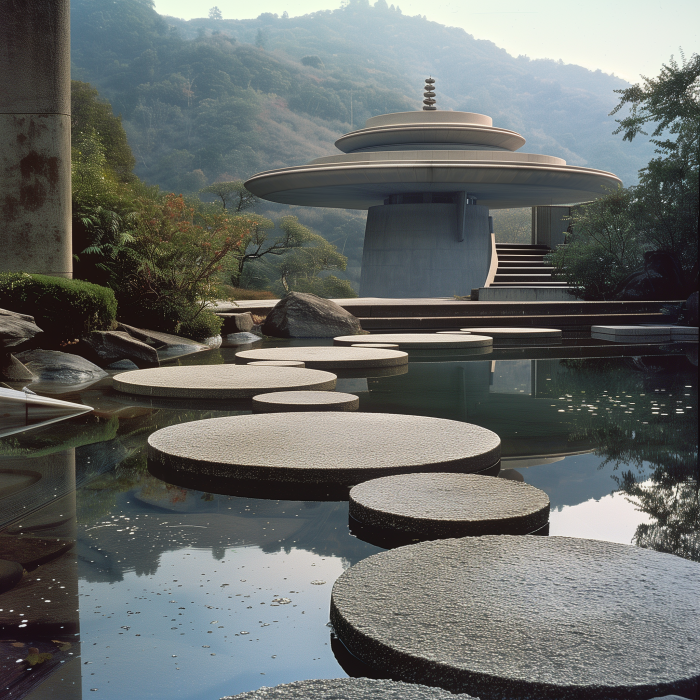
In the realm of architectural innovation, where tradition meets futuristic imagination, lies the visionary work of architect Maya Ito. Inspired by the timeless principles of Frank Lloyd Wright’s organic architecture and infused with a forward-thinking ethos of far futurism, Ito has embarked on a groundbreaking endeavor: the creation of a Zen temple that serves as both a sanctuary and a testament to humanity’s response to the climate crisis.
The Legacy of Frank Lloyd Wright:
Frank Lloyd Wright, an American architect of unparalleled influence, left an indelible mark on the world of architecture with his organic approach to design. Rejecting the rigid confines of traditional architectural styles, Wright sought harmony between human habitation and the natural environment. His philosophy, often encapsulated by the phrase “form follows function,” emphasized the integration of buildings with their surroundings, blurring the boundaries between indoors and outdoors.
Wright’s principles resonated deeply with Maya Ito, who found in his work a profound reverence for nature and an unwavering commitment to innovation. Inspired by Wright’s legacy, Ito embarked on a journey to push the boundaries of architectural design even further, merging the past with the future in a bold expression of artistic vision.
Far Futurism:
Far futurism, a burgeoning movement within the realm of speculative design, envisions a future where humanity’s relationship with technology and the environment has evolved dramatically. It embraces radical ideas and pushes the boundaries of what is possible, exploring scenarios that transcend conventional notions of time and space. In the face of pressing global challenges such as climate change, far futurism offers a creative lens through which architects like Maya Ito can envision transformative solutions.
The Zen Temple of Climate Consciousness:
Against the backdrop of mounting environmental concerns, Maya Ito embarked on a mission to create a sanctuary that not only honors the wisdom of the past but also offers a beacon of hope for the future. The result of her endeavor is the Zen Temple of Climate Consciousness – a masterful synthesis of architectural tradition, technological innovation, and spiritual reflection.
Nestled amidst a pristine landscape, the temple embodies the principles of organic architecture championed by Frank Lloyd Wright, seamlessly blending into its surroundings with graceful curves and harmonious lines. Yet, it is not merely a tribute to the past; it is a testament to humanity’s resilience and capacity for adaptation in the face of adversity.
At the heart of the temple lies a central courtyard, bathed in natural light and adorned with lush greenery – a tranquil oasis that invites visitors to pause and reflect on their relationship with the environment. Here, traditional Zen gardens coexist with cutting-edge sustainable technologies, symbolizing the fusion of ancient wisdom with modern ingenuity.
Innovative Solutions for a Sustainable Future:
The Zen Temple of Climate Consciousness is more than just a place of worship; it is a living laboratory for sustainable design and ecological stewardship. Solar panels adorn the temple’s roof, harnessing the power of the sun to provide renewable energy for its inhabitants. Rainwater collection systems ensure efficient water usage, while passive cooling techniques mitigate the need for artificial climate control.
But perhaps the most profound aspect of the temple’s design lies in its underlying ethos – a deep-seated commitment to mindfulness and environmental responsibility. Through guided meditation sessions, educational workshops, and community outreach programs, the temple serves as a catalyst for positive change, inspiring individuals to adopt more sustainable lifestyles and become stewards of the earth.
A Symbol of Hope and Renewal:
In an era defined by uncertainty and upheaval, the Zen Temple of Climate Consciousness stands as a beacon of hope and renewal – a testament to the power of human creativity and collective action. Inspired by the visionary legacy of Frank Lloyd Wright and propelled by the boundless imagination of far futurism, Maya Ito has crafted not just a building, but a living testament to the resilience of the human spirit in the face of adversity.
As visitors pass through its hallowed halls, they are reminded of their interconnectedness with the natural world and their capacity to effect positive change. In the quiet serenity of the temple’s courtyard, amidst the gentle rustle of leaves and the soft murmur of flowing water, they find solace and inspiration – and perhaps, a glimpse of a brighter future, where harmony between humanity and the environment is not just a distant dream, but a living reality.



Leave a Reply