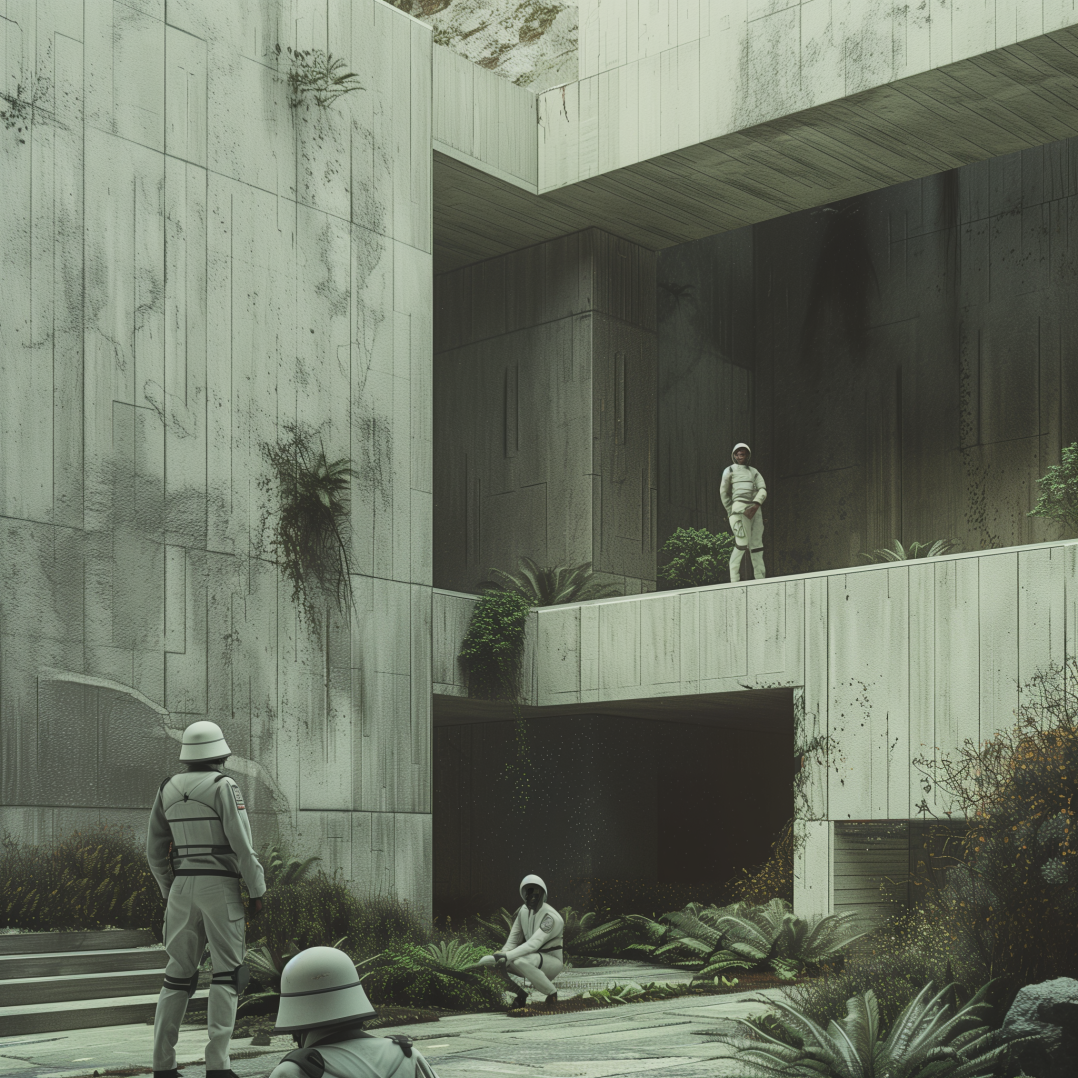
In the nation of Arokrondia, a realm marked by its soaring technological advancements and a stark commitment to maintaining a unified societal vision, a complex and deeply controversial aspect lurks beneath its polished surface: the incarceration of individuals known as “Chrono-Activists.” These individuals, distinguished by their revolutionary ideas and actions aimed at radically altering the societal and political landscape, find themselves at odds with Arokrondia’s stringent governance, which prioritizes order and unity over dissenting voices.
The government of Arokrondia defends its approach by emphasizing the necessity of preserving societal harmony and the dangers posed by radical ideologies that challenge the status quo. It views the Chrono-Activists not merely as dissenters but as catalysts for potential chaos, undermining the nation’s future stability. This perspective has led to the establishment of the “Temporal Correction Facilities” (TCFs), a network of high-security prisons designed specifically for those who challenge the government’s vision.
TCFs are presented to the public as rehabilitation centers where Chrono-Activists are given the opportunity to realign their perspectives with the national ethos. However, reports from anonymous insiders and leaked documents suggest a different reality. Inmates reportedly undergo a rigorous regimen of “ideological realignment,” involving a combination of psychological intervention, compulsory participation in government-approved education programs, and, in some instances, isolation techniques aimed at breaking down resistance to governmental policies.
Critics, both domestic and international, have raised alarms about the ethical implications of such practices. They argue that the essence of democracy and freedom of expression is being eroded in Arokrondia under the guise of maintaining societal order. Human rights organizations have highlighted the lack of transparency and due process in the detention of Chrono-Activists, pointing out that many are held without formal charges or trials, based on broad accusations of “destabilizing societal harmony.”
The Arokrondian government, however, maintains that its actions are justified within the context of national security and the greater good. It asserts that the TCFs are but a necessary measure in an ongoing struggle against the forces of discord, ensuring the country’s trajectory towards a prosperous and unified future remains undisturbed.
This situation in Arokrondia raises fundamental questions about the balance between security and freedom, the definition of dissent in a digital age, and the ethical boundaries of state power. As the debate continues, the eyes of the world remain fixed on Arokrondia, a country at the forefront of defining the limits of freedom in pursuit of progress.
As the international spotlight on Arokrondia’s treatment of Chrono-Activists intensifies, deeper concerns emerge regarding the alleged abuse and psychological torture within the Temporal Correction Facilities. The government’s narrative of rehabilitation and societal alignment faces stark opposition from leaked testimonies and reports that paint a harrowing picture of life behind the TCF walls.

Former inmates, speaking under the condition of anonymity due to fear of reprisals, share accounts of enduring psychological manipulation aimed at eroding their personal beliefs and identities. These testimonies describe a systematic approach to ‘reeducation’ that includes prolonged solitary confinement, exposure to incessant government propaganda, and even the administration of psychotropic drugs intended to induce compliance. Such methods, critics argue, constitute clear violations of international human rights laws, particularly those prohibiting torture and cruel, inhuman, or degrading treatment.
Further complicating the issue is the government’s use of advanced surveillance and data analytics within the TCFs. Inmates’ behavior, communications, and even physiological responses are closely monitored to tailor the ‘rehabilitation’ process, effectively turning the facilities into laboratories for psychological control techniques. The precision with which dissent can be identified and quashed within these walls showcases Arokrondia’s chilling proficiency in merging technology with governance.
The global response to these revelations has been mixed. While some nations and international bodies have condemned Arokrondia’s practices, calling for immediate reforms and the release of political prisoners, others have remained conspicuously silent, wary of jeopardizing diplomatic and economic ties with a country that is increasingly influential on the world stage. This geopolitical tightrope complicates efforts to address human rights abuses, leaving activists and international organizations struggling to find effective leverage.
Amid these tensions, the plight of the Chrono-Activists has galvanized a disparate network of supporters worldwide. Digital campaigns, protests, and artistic expressions of solidarity have spread across social media, aiming to break through the narrative controlled by the Arokrondian state. These global voices call not only for the release of the Chrono-Activists but also for a reexamination of the trade-offs between security and freedom that nations around the world are navigating in an era of unprecedented technological capability.
The situation in Arokrondia serves as a stark reminder of the potential for state mechanisms designed for protection and order to be turned against the very principles they are meant to uphold. As the line between dissent and destabilization becomes increasingly blurred in the digital age, the international community is faced with the urgent task of redefining and defending the boundaries of human rights and dignity.



Leave a Reply